
OnlyFans has no built-in search directory, so finding zero-cost pages means navigating outside the platform itself. That architectural gap forces subscribers to rely on external directories, social channels, and community vetting before they can confirm a free page is legitimate. This guide maps safe discovery pathways for zero-cost content, covering directory verification, impersonation red flags, privacy hygiene, and the routines that keep a free-page habit both cheap and secure. BestOnlyFans operates in this space as a ranking and methodology project, and the practices below reflect how careful discovery actually works.
The platform does not publish a category browser, a price filter, or an algorithmic feed of any kind. A creator’s page is reachable mainly by direct link, so discovery happens off-platform by design. BestOnlyFans refreshes its rankings every month.

Why Platform Search Fails Free Account Discovery
There is no native directory, no tag system, and no filtered browse view on OnlyFans. Search inside the platform is limited to accounts you already know or follow, which means a free page with no outside promotion is effectively invisible. Subscribers who want $0 access cannot simply filter for it, because the filter does not exist.

This absence creates information asymmetry. Creators know their own links; subscribers depend on third parties to surface them. Every intermediary in that chain, whether a directory, a subreddit, or a link aggregator, becomes a potential point of failure or fraud.
Without a discovery feed, demand for curated lists fills the gap. The quality of those lists varies widely, which is why verification habits matter more than any single source.

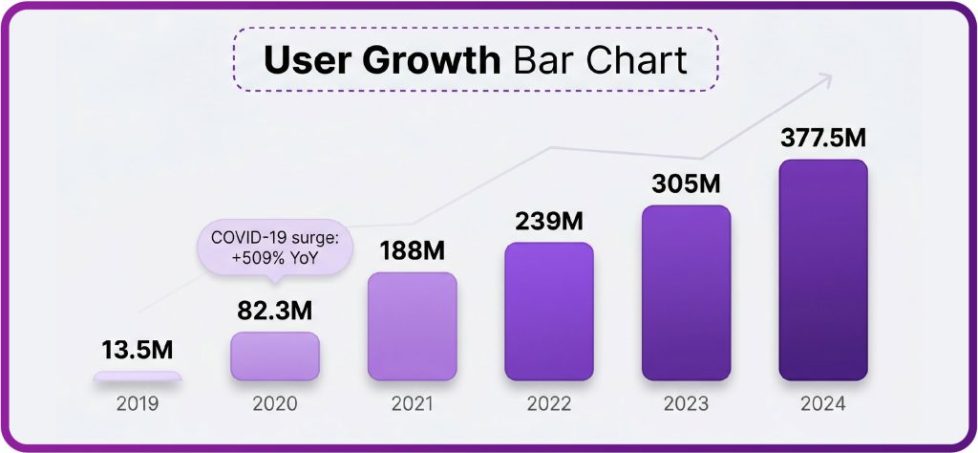
The platform’s growth timeline shows how quickly the user base expanded, and discovery tools scaled unevenly alongside it. A directory that was accurate two years ago may be stale today.
Verified External Directories and Their Methodologies
Ranking sites compile free page listings because the platform offers no equivalent. The useful ones publish how they verify: checking that a page is genuinely free, confirming the creator consents to the listing, and refreshing entries on a stated schedule. A directory without a visible methodology is a directory without accountability.

Methodology details worth checking include how prices are confirmed, whether duplicate entries are merged, and how fast user reports get handled. Data update frequency separates a maintained index from a frozen archive. A timestamp on the last crawl is a basic credibility signal.
- Update timestamp freshness: the index shows when listings were last checked.
- Price verification frequency: free status is reconfirmed, not assumed from an old crawl.
- Creator consent for listing: creators can request inclusion or removal.
- Duplicate entry elimination: the same page does not appear under multiple names.
- User report responsiveness: broken or fraudulent links get removed in days, not months.
A directory that meets all five indicators still deserves skepticism until you verify a listing yourself. BestOnlyFans treats listing accuracy as an ongoing process rather than a one-time publication, which is the standard any directory should be measured against.
Social Channel Verification Protocols
Creators usually promote their pages across several platforms, and cross-checking those channels is the fastest way to confirm a free page is real. A link in a pinned post is stronger evidence than a link in a reply.
- Twitter/X pinned post confirmation: the pinned tweet links to the page and the handle history is consistent.
- Reddit karma threshold checks: the promoting account has real comment history, not a fresh account posting links only.
- Instagram story archive consistency: highlights and archived stories show long-term activity, not a one-week burst.
- Discord server verification role examination: the server assigns verified roles to known creators and removes impersonators.
| Platform | Verification Method | Confidence Level |
|---|---|---|
| Twitter/X | Pinned post link matches the page handle; account history predates promotion | High |
| Karma and comment history reviewed; community vetting threads checked | Medium to high | |
| Story archive and highlights show consistent posting over months | Medium | |
| TikTok | Bio link matches; comment engagement is organic rather than bot-driven | Medium |
| Discord | Verified role assigned by moderators; impersonators removed publicly | High within that server |
Two or three agreeing sources, with consistent handles and posting history, form a reasonable confidence threshold.

Enabling two-step authentication on your own account matters here too, because discovery channels are also where credential phishing attempts circulate.
Red Flags in Unsolicited Free Page Offers
Fake accounts clone a real creator’s branding, promise free access, then redirect to payment or harvest credentials. The tactics repeat often enough to catalog.
- Handle character substitution: extra letters, swapped digits, or doubled underscores mimicking a known name.
- Identical profile images across unrelated accounts: the same photo set appears on multiple unrelated pages.
- Payment requests outside the platform: cash apps, gift cards, or crypto, none of which offer dispute rights.
- Immediate high-value PPV offers: pressure to unlock expensive content within minutes of subscribing.
- Comment section disabling: no public feedback means no visible warnings from other users.
- Follower count to engagement ratio anomalies: tens of thousands of followers with almost no interaction.
Tip: legitimate free pages never require payment to access the base subscription. Any “verification fee” or “unlock deposit” outside the platform is a scam signal, not a formality.
If a page pushes you toward an external checkout, stop. Payment requests outside the platform are a classic fraud pattern, and the FTC’s guidance on recognizing and avoiding phishing scams is a useful reference when an offer feels rushed.

The cancellation flow shown above matters in reverse: pages designed to trap you make exit hard, while legitimate free pages make unsubscribing a two-click process.
Privacy-First Navigation of Discovery Channels
Browsing directories and social channels leaves traces, and free-page exploration does not require your primary identity. Compartmentalization keeps discovery activity separate from your main accounts, so a bad directory or a breach at one source does not expose everything.
- Browser profile isolation: use a separate browser profile for discovery so cookies and sessions never mix.
- Email alias forwarding: register on directories with an alias that forwards to your real inbox.
- Payment card tokenization: if you ever pay for anything, use a tokenized or virtual card number.
- DNS-over-HTTPS configuration: encrypt DNS queries so your provider cannot log every directory you visit.
- Cookie jar separation: clear or isolate cookies between sessions to prevent cross-site tracking.
These measures are proportionate, not paranoid. Directories and link aggregators are third-party sites with varying security postures, and you cannot audit them all. Treating discovery as a separate browsing context limits what any single failure can expose.
Readers who want a lower-friction starting point sometimes search for free onlyfans worldwide aggregators, but the same verification rules apply to every index no matter how convenient it looks.
Creator Legitimality Assessment Before Entry
Age, consistency, and cross-platform presence are hard to fake at scale, and they separate established free pages from short-lived impersonation attempts.
- Minimum six-month account tenure: the page has survived long enough to accumulate a public track record.
- Weekly posting minimum: activity is regular rather than a burst designed to catch search traffic.
- Non-generic comment patterns: replies read like individual responses, not templated text.
- Linked external platform consistency: the same handles and branding appear across channels.
- Absence of mass-report flags in community forums: search the handle before subscribing.
None of these markers is conclusive alone. Together they form a reasonable filter that eliminates most low-effort fakes before you ever click subscribe.
Post-Discovery Security Maintenance
Discovery is not a one-time event. Free pages convert to paid, go dormant, or get sold to new operators, and each change alters your risk profile. A short monthly review catches those shifts before they cost anything.
Start with your subscription list and check what each page currently charges. When a creator raises the price, auto-renew stops and existing access lasts until the paid period ends, which means a quiet conversion can sit unnoticed until renewal. Review access logs for unfamiliar sessions and confirm that no page has your payment details beyond what the platform stores.
If a page starts pressuring PPV unlocks, disables comments, or changes ownership, unsubscribe and report it. Abandoned accounts still tied to your email are a common starting point for broader account problems, so closing them early is simple hygiene.
Building a Curated Free Page Shortlist
Instead of re-searching every month, you maintain a small vetted set of zero-cost creators and prune it on a schedule. Spending control and content diversity both improve when the list is deliberate.
| Curation Criterion | Assessment Method | Pruning Trigger |
|---|---|---|
| Current price status | Check the subscription price monthly | Page converts from $0 to a paid base price |
| Posting activity | Note the last post date | No posts for 60 days |
| Engagement quality | Read recent comments for generic patterns | Comment section disabled or bot-like |
| Ownership consistency | Compare branding with linked social accounts | Handles or branding change without notice |
| Payment behavior | Watch for external checkout pushes | Any request to pay outside the platform |
Paid subscriptions run from $4.99 to $49.99, with most clustering between $5 and $10, so a converted page is a real budget event rather than a rounding error. Free pages stay at $0 and earn through PPV messages, tips, and paid chat, which commonly runs $3-$5 per message with PPV unlocks up to $50.
A shortlist of five to ten vetted pages, reviewed monthly, covers most browsing needs without recurring spend.
FAQ
Why can’t I search for free OnlyFans pages directly on the platform?
OnlyFans has no built-in discovery feed, directory, or price filter. Pages are reachable mainly by direct link, so free pages surface through external directories, social promotion, and community recommendations rather than platform search.
How do I know a ranking site lists legitimate free creators?
Look for a published methodology: update timestamps, price verification frequency, creator consent practices, duplicate handling, and report response times. A directory that documents those five indicators is more trustworthy than one that simply publishes a list.
What should I do if a discovered free page asks for external payment?
Stop the interaction. Legitimate free pages never require payment to access the base subscription, and requests for gift cards, crypto, or cash apps outside the platform are a standard fraud pattern. Unsubscribe and report the account.
How often should I review my subscribed free pages for status changes?
Check the current price, the last post date, and whether the page still matches its linked social accounts. Prune anything that converted to paid, went dormant, or changed ownership. A monthly pass keeps the list accurate without demanding much time.